
On dust bags, drawers, and the second bag nobody expected
Every good bag arrives inside something. A box, a layer of tissue, a dust bag with a drawstring. Most of it is gone within the hour. The box goes to recycling, the tissue to the bin, and the dust bag is folded into a drawer, where it stays until the next move, when it finally leaves with everything else nobody could find a use for.
None of this is anyone's fault. Packaging is designed for the first ten minutes of ownership, not the next ten years. It does its job on the doorstep and has nothing to do after that.
We started from a different question. What if the thing that protects the bag on its way to you were worth keeping for its own sake?
What a dust bag is for, and what it usually becomes
A dust bag has a real purpose. Leather and waxed canvas do not like dust, direct light, or rubbing against other things in a cupboard. Between trips, a bag should be covered.
In practice, most dust bags are too thin to protect much and too plain to use for anything else. They cover the bag in storage, if they are remembered. Otherwise they are a drawstring and a logo, waiting.
That is not waste in the dramatic sense. It is simply an object that was made without being thought through. We would rather think it through.
The Outer
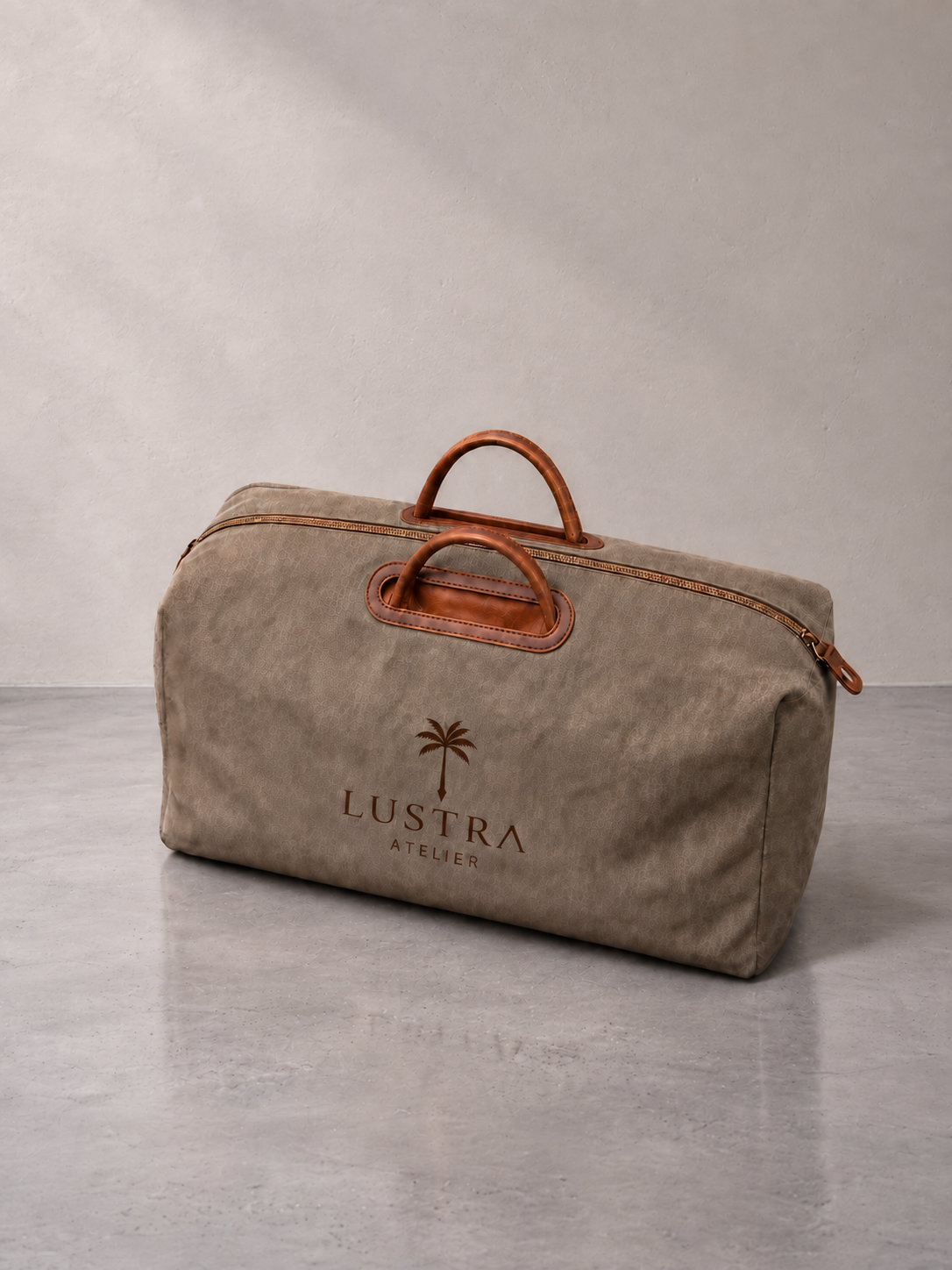
Every piece of the Palm Trilogy ships inside The Outer. It is cut from our printed monogram canvas, closed with a zip that runs all the way around, and carried by its own leather handles.
The detail that matters is at the top. Two slots let the handles of the weekender inside pass straight through, so the bag can be carried while it is still covered. On the way to you, it travels protected. On a rainy platform, it can stay that way.
Unzip it, and The Outer becomes something else entirely: a bag of its own.
Three lives of one object
In transit. It shields the weekender on the journey from the atelier to your door. No box to flatten, no tissue to throw away.
In storage. It keeps dust and light off leather and canvas between departures. Because it zips closed rather than cinching, the bag inside keeps its shape.
After that. It is a second bag, zipped, leather-handled, marked with the palm. Not precious, and not meant to be.
The bag you can treat badly
This is the part we like most.
A weekender worth keeping for twenty years deserves a little care. Not every trip deserves the weekender. The beach does not. Neither does the gym, the boot of the car, the Saturday market, or the laundry run.
The Outer is the bag for all of that. Sand, wet towels, a bottle of olive oil that was not quite closed. It can take it. It is the one you can afford to treat badly, so the other one lasts.
Two bags, then, with one clear division of labour. One for departures. One for everything in between.
On sustainability, honestly
The word is used so freely that it has almost stopped meaning anything, so we will be precise about what we are claiming.
We are not claiming that a bag becomes sustainable because it is made of canvas, or that one well-made dust cover offsets anything. What we are saying is smaller and easier to check: the packaging does not become waste. The material that would have been made anyway is made to be used.
The rest depends on how long things are kept. That has always been the real measure. A bag carried for twenty years does more than any label on its packaging ever could. The Outer is simply the same idea applied to the thing it arrives in.
Owning less, better
LUSTRA began with a simple conviction: being matters more than owning. That does not mean owning nothing. It means owning fewer things, each of which earns its place.
The Outer is not an extra. It is what would have been thrown away, redesigned so that it stays. One less object in the bin. One more that is actually useful.
Freedom is the only real luxury. The rest is luggage. Some of it, at least, should be worth carrying.
The Palm Trilogy — three weekenders in waxed canvas and full-grain leather, each delivered in The Outer. See the bags or read how they are made.